Photography Tips for Capturing August Sunsets
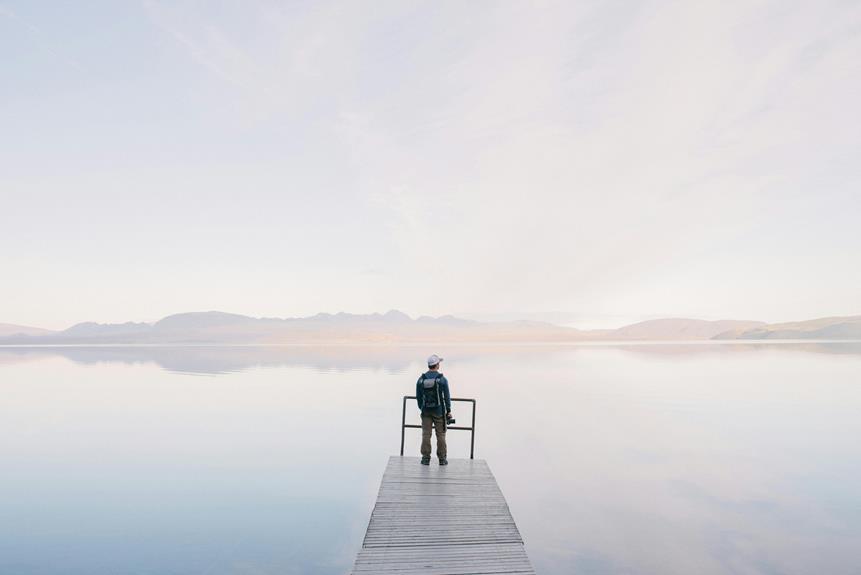
When capturing August sunsets, aim for a balanced histogram to preserve details in both highlights and shadows. Underexpose slightly to capture vibrant clouds, and adjust your metering mode to match the scene. Use intense light to create silhouette portraits or shoot backlit landscapes for added depth. Experiment with unique compositions, like incorporating urban landscapes or shooting from unusual vantages. And don't forget to take advantage of the golden hour's soft, warm light. As you fine-tune your skills, you'll master the secrets to capturing truly breathtaking sunset shots that will leave everyone in awe – and there's still so much more to discover.
Key Takeaways
- Aim for a balanced histogram to capture a range of tones from brightest highlights to darkest shadows in August sunset shots.
- Underexpose slightly to preserve details in clouds, and adjust camera's metering mode according to the scene for optimal results.
- Experiment with unique composition inspiration, such as incorporating urban landscapes or shooting from unusual vantage points, to add depth and interest.
- Shoot during the fleeting golden hour, about an hour before sunset, for soft, warm light, and experiment with a soft focus effect to add depth and emotion.
- Use a fast shutter speed to freeze the action and capture sharp, defined images of movement and action during August sunsets.
Mastering Exposure for Sunset Shots
When shooting August sunsets, one of the biggest challenges you'll face is mastering exposure, as the intense golden light can easily overwhelm your camera's sensor.
To achieve a well-balanced image, you'll want to aim for a Balanced Histogram. This means adjusting your camera settings to capture a range of tones, from the brightest highlights to the darkest shadows.
To get those coveted Silky Skies, try underexposing your shot slightly to preserve the details in the clouds. You can do this by dialing down your exposure compensation or reducing your ISO. Remember, it's better to err on the side of caution and underexpose than to risk blowing out the highlights.
Pay attention to your camera's metering mode and adjust it according to the scene. If you're shooting in spot metering mode, take readings from different areas of the frame to confirm you're capturing the full range of tones.
Conquering Harsh Light and Shadows
Now that you've mastered exposure for stunning sunset shots, it's time to tackle the next challenge: harnessing the intense light and deep shadows that often come with August's golden hour.
This harsh light can be overwhelming, but with the right techniques, you can turn it into an advantage. One approach is to use the intense light to create silhouette portraits. Position your subject in front of the sun, and adjust your exposure to capture their outline against the vibrant colors of the sky.
This will add depth and drama to your shot.
Another way to conquer harsh light is to shoot backlit landscapes. Instead of facing the sun directly, position yourself so that it's behind your subject.
This will create a beautiful rim of light around your subject, separating it from the surrounding environment. Be careful not to overexpose the sky, as this can lead to lost details.
Finding Unique Composition Inspiration
Five simple yet powerful composition techniques can help you break free from the usual sunset photography clichés and capture truly unique images.
You can start by experimenting with Rule Breaking compositions that challenge traditional photography rules. For instance, try placing your horizon in the top or bottom third of the frame, or use negative space to create a sense of simplicity.
Another approach is to incorporate Urban Landscapes into your sunset shots. Capture the vibrant colors of the sky reflecting off skyscrapers or city streets, adding a fresh twist to the typical sunset scene.
You can also try shooting from unusual vantage points, like from a rooftop or a bridge, to add depth and interest to your photos.
Additionally, consider using leading lines, framing, or symmetry to add visual appeal to your images.
Working With Golden Hour Magic
During the fleeting golden hour, the soft, warm light bathing your scene can elevate your sunset photography to new heights.
This magical time of day, typically occurring about an hour before sunset, is when the sun's rays pass through more of the Earth's atmosphere, scattering shorter blue wavelengths and leaving mainly longer red and yellow wavelengths to reach your camera sensor.
The result is a warm, golden glow that can add depth and emotion to your images.
To make the most of this golden hour magic, try experimenting with a soft focus effect.
Shoot with a wide-aperture lens (like f/1.4 or f/2.8) to create a shallow depth of field, blurring the background and drawing attention to your subject.
You can also use a lens with a warm tone or apply a golden hour preset in post-processing to enhance the golden glow.
Remember to shoot quickly, as the golden hour is short-lived, and be prepared to adjust your settings as the light changes.
With practice, you'll be able to capture the essence of this enchanting time of day, adding a touch of magic to your August sunset photography.
Capturing Movement and Action
As you've mastered the art of capturing the warm, golden tones of the golden hour, it's time to turn your attention to the dynamic elements of August sunsets, where the movement of clouds, waves, or people can add an extra layer of energy and excitement to your photos.
To freeze the action, you'll need a fast shutter speed. This is especially essential when capturing waves or water activities, as it will help you achieve a sharp, defined image.
A fast shutter speed will also enable you to freeze the movement of clouds, creating a sense of drama and energy in your photo.
On the other hand, if you want to create a sense of motion and blur, you can use a slower shutter speed. This technique is perfect for capturing silky water or the movement of people.
Editing for Vibrant Sunset Colors
When editing your August sunset photos, you'll want to amplify the warm, vibrant colors that make these scenes so breathtaking, and the right post-processing techniques can help you achieve that.
One technique to master is Color Grading, which involves applying a consistent color tone to your image. This can be done using the 'Color Grading' tool in your editing software, or by creating a custom preset. Adjust the sliders to enhance the warm tones, such as oranges, yellows, and reds, while reducing the cool tones like blues and greens.
To take your editing to the next level, make use of Local Adjustments. These allow you to make targeted adjustments to specific areas of the image, rather than applying global changes.
Use the 'Brush' tool to paint in subtle adjustments to the sky, landscape, or subjects, enhancing the colors and contrast. By combining Color Grading and Local Adjustments, you'll be able to create stunning, vibrant sunset images that truly capture the essence of August's golden hour.
Frequently Asked Questions
What Camera Settings Are Best for Capturing Sunsets in Cloudy Weather?
When shooting sunsets in cloudy weather, you'll want to adjust your camera settings to balance Cloudy Contrast. Try a slower Sunset Shutter speed to capture soft, diffused light, and don't forget to compensate for exposure with a lower ISO.
Can I Use a Smartphone to Take Professional-Looking Sunset Photos?
"You're not exactly lugging around a daguerreotype, so yes, you can capture stunning sunset shots with your smartphone! Invest in phone accessories like lenses and tripods, and master mobile editing to take your pics from amateur to pro."
How Do I Protect My Camera Equipment From Sand at the Beach?
When you're shooting at the beach, you'll want to protect your gear from sand and water damage. Invest in beach-specific backpacks and sandproof cases to keep your equipment safe and secure.
What's the Best Way to Capture Sunsets in Urban Environments?
You're likely one of the 75% of people who live in urban areas, so capturing stunning sunsets in cityscapes is a must! Find a rooftop vantage point to frame skyscrapers against vibrant hues, and play with reflections off glass and steel.
Can I Take Great Sunset Photos in Cold or Freezing Temperatures?
You can capture stunning sunset pics in cold or freezing temps by embracing the frosty landscapes and icy silhouettes. Just bundle up, use a tripod, and adjust your camera settings to compensate for the cold, and you'll be golden!
Conclusion
As you pack up your gear and head home, the sun dips below the horizon, leaving you with a sense of anticipation – what'll tomorrow's sunset bring?
Will you be ready to capture its fiery beauty?
The techniques you've learned will guide you, but it's up to you to chase the next breathtaking moment.
The hunt is on, and the August sunsets are waiting.
Get ready to click, create, and mesmerize.